What is MagDatix Link Data used for?
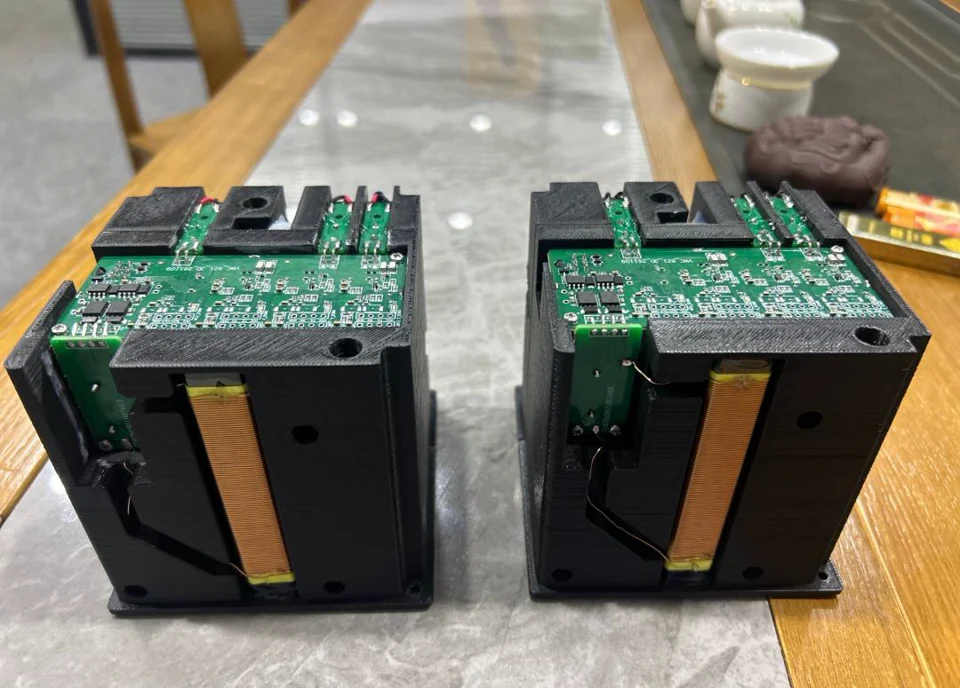
Link Data (VWC-01501-DA) sends small equipment readings or status messages between compatible, powered terminals. It uses half-duplex magnetic-induction communication and connects to a host over UART.
How to evaluate Link Data
When should I evaluate MagDatix Link Locate?
Evaluate Link Locate when you need to estimate the position of a compatible terminal in a defined plane. Agree on the reference layout, permissible position error and update interval before testing.
How to evaluate Link Locate
When should I evaluate MagDatix Vector Data?
Evaluate Vector Data when two terminals need to exchange data and equipment orientation can change. Its three-axis coil layout is intended for that evaluation.
How to evaluate Vector Data
What does a MagDatix Vector Locate evaluation require?
Use Vector Locate to evaluate three-dimensional position estimation for a compatible terminal. Define the working volume, reference coordinates and anchor locations with engineering.
How to evaluate Vector Locate
How can a borehole sensor send readings to a wellhead reader?
Evaluate Link Data for a small sensor message between a powered downhole terminal and a compatible powered reader at the wellhead. Define the casing, cover, endpoint positions and UART connection. Record sent and received messages at the intended reporting interval before selecting a configuration.
See the evaluation details
How can a pool-cleaning robot send status data to a poolside controller?
Evaluate Link Data for small status messages between the powered robot-side terminal and a compatible powered poolside reader. Test with the intended closed housing, water conditions and operating equipment. If orientation varies, discuss Vector Data and compare delivery across those orientations.
See the evaluation details
Can a sensor inside a sealed metal housing send data to an external reader?
Link Data is a configuration to evaluate for a small sensor message to a compatible powered reader. Record the housing material, thickness, seams, openings and both terminal positions. Test the closed assembly and document the possible signal paths and message delivery for that exact geometry.
See the evaluation details
What does the 28-metre test refer to?
The technical team reports a 28-metre node spacing in open air, with both antennas pointing vertically upward and no packet loss reported over 10 minutes. Raw logs, packet count and device configuration have not been reviewed. This is not evidence of an underground or through-ground link.
What does the 15-metre figure mean?
It is the approximate node spacing reported for one underground pilot. It is not a measured through-rock range or a guaranteed link distance.
What exactly do you provide today?
Link Data (VWC-01501-DA) is our current flat-format module for half-duplex magnetic-induction data communication and UART integration. Confirm both terminals, antennas, host equipment and power for the evaluation.
How do Link and Vector differ?
Link Data uses a flat format and Link Locate is for planar position estimation. Vector Data uses a three-axis layout and Vector Locate is for 3D position estimation. Confirm the exact configuration, samples and test criteria with engineering.
Can your engineers review another difficult communication scenario?
Yes. We welcome descriptions of similar route and communication problems. Engineers can study the scenario and provide initial feedback. A proposed solution, product fit, development scope or response time requires separate confirmation. Do not submit confidential or sensitive site details through this website.
Can it carry safety alarms or interlock commands?
The public evidence here does not establish those capabilities. A safety-related use needs the applicable system design, compliance review, hazard analysis and field acceptance evidence.
Which equipment data links should we evaluate first?
Start with a borehole or buried instrument, a status link from pool equipment to a poolside controller, or an enclosed sensor sending to an external reader.
What should we test for a pool equipment status link?
Run the equipment with its intended housing, orientation and pool conditions. Record the reader position, the power at both ends and how many valid status messages arrive over the agreed interval.
What should we bring to a first review?
A route sketch, the current communication method and failure point, approximate geometry, data size and update interval, power and installation limits, plus the cost of a missed reading. Mark estimates as estimates.

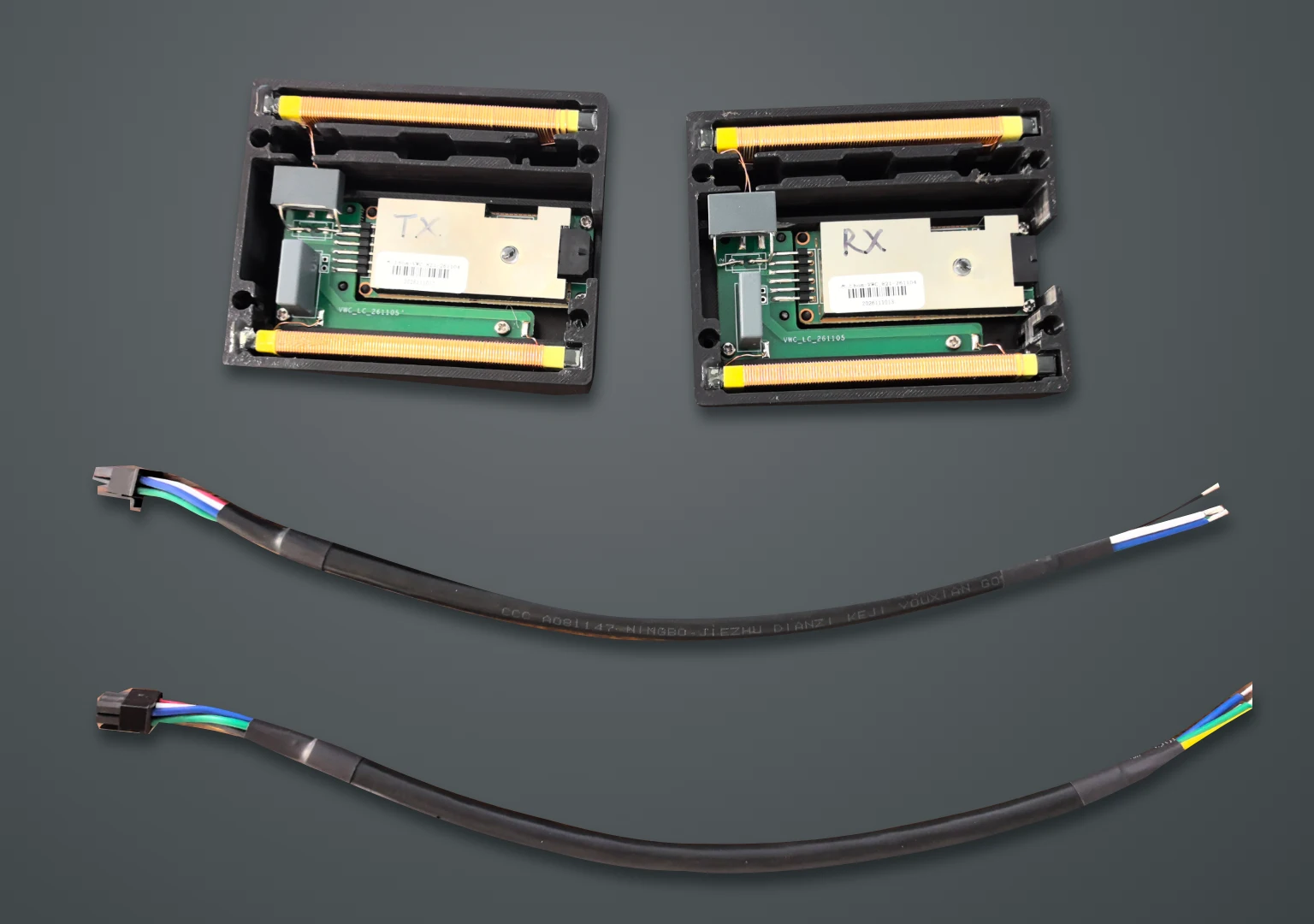 Actual Link hardware: boards, coils and connector leads.